
Moving Space
Darstellende Kunst Zeitgenössische Kunst Theorie Musik Öffentlichkeit Zivilgesellschaft Präsentation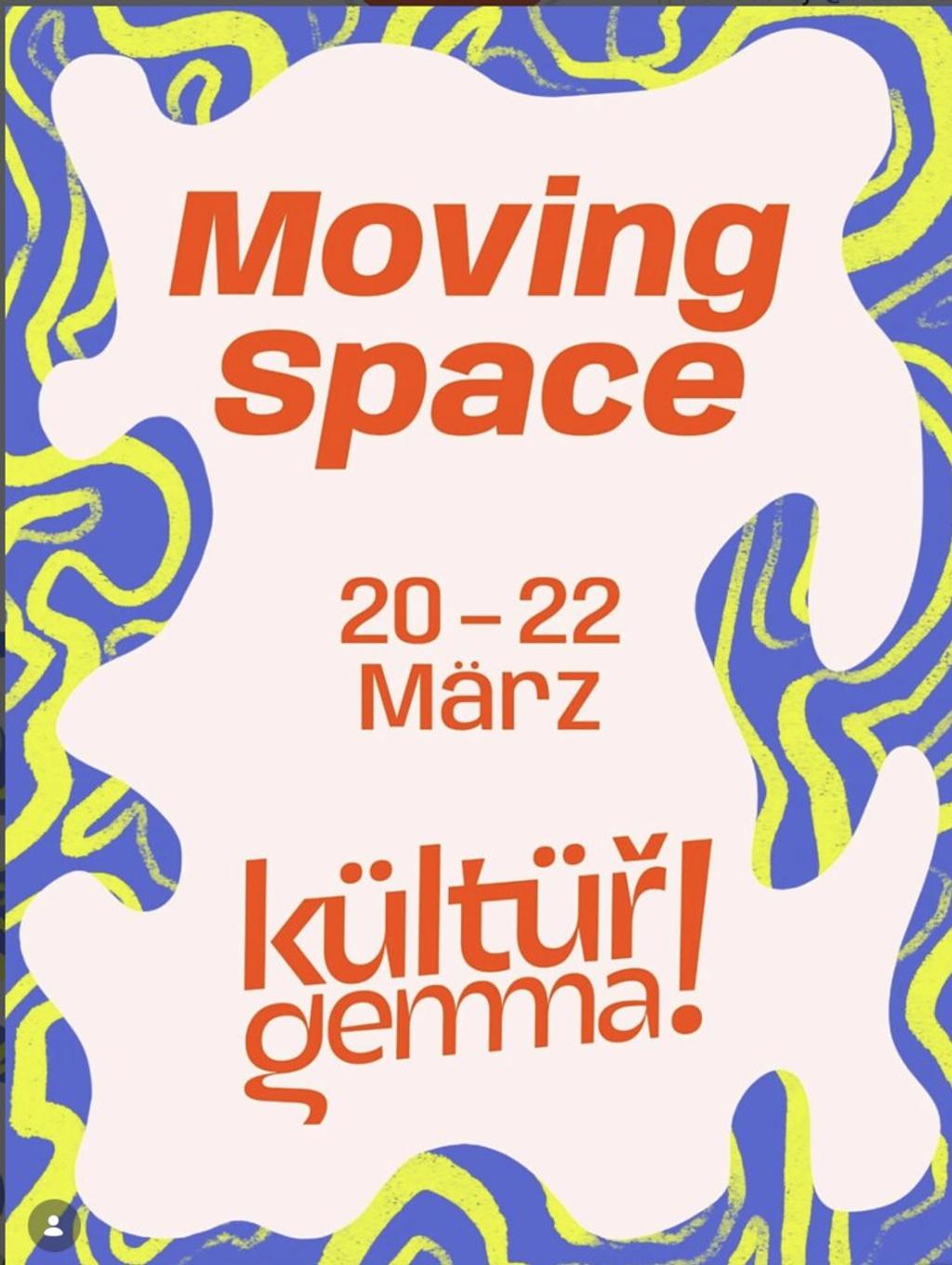
Error!
You must log in to access this page.
Verbindung zu esel.at
FINAL PRESENTATION SCHOLARS AND FELLOWS 2025
The presentation of the 2025 kültüř gemma! fellows and scholars unfolds not as a conclusion, but as a constellation: the outcome of six months shaped by mentorship, collective study, and embodied practices of listening.
Program
20 March
18:30 to 22:30
Key topics: Collective Celebration, Reclaiming Archive.
Moderation: Tayla Myree
18:30 to 18:45 Welcome speeches
18:45 to 19:30 Food by Auntie Esi
19:30 to 20:00 Keynote: Alok Vaid-Menon in conversation with Faris Cuchi Gezahegn
20:00 to 20:30 Activation talk: Merci Ewuresi Clay and Healing
20:45 to 21:15 Concert: ÆNGL
21:30 to 22:30 Concert: FAYIM
21 March
17:00 to 24:00
Key topics: Body Technology, Communal Care
Moderation: Njideka Iroh
17:00 to 18:30 Activation: Viviane Lê Tanzmeister Social dance forms and playful movement
18:30 to 19:30 Activation: Ghandar Pandit Chay Haft Seen Rituals of spring nourishment
19:30 to 20:15 Bilad Asham food by Jihad
20:15 to 21:15 Performance: Tonny Africa The common Man’s Disease
21:30 to 22:30 Concert: Kvsal
22:30 to 24:00 DJ Set: Gawdesque
22 March
17:00 to 23:00
Key Topics: Voices of Resistance, Intergenerational Bridges
Moderation: Munira Mohamud
17:00 to 19:00 Workshop: Viviane Lê Tanzmeister Coconuts (and Bananas) - a coconut crafting workshop (BIPoC only)
19:00 to 19:30 Food by Auntie Stephanie
19:30 to 20:30 Film Screening and Artist Talk: Mohammad Abou Chucker Stateless
20:30 to 21:30 Artist Talk with fellows and scholars in conversation with Munira Mohamud
21:30 to 23:00 DJ-Set: Zey
CURATORIAL STATEMENT
What emerges here is not a series of isolated works, but a dynamic field of artistic positions. These practices move fluidly across memory, migration, refusal, and collective imagination. The artists gathered in this edition inhabit territories where the personal, the political, and the ancestral continuously intersect.
Many of the participating artists engage with sites where official histories fall silent. Their works speak from the margins — from lived experiences denied protection, recognition, or legitimacy by state and institutional frameworks. In these contexts, storytelling becomes an act of resistance, and the archives of collective experience extend beyond institutional walls, finding form in bodies, gestures, oral narratives, community rituals, and everyday acts of survival.
This exhibition proposes the archive not as a static repository, but as a living, contested terrain. Through artistic practice, participants trace the fragments of collective memory that persist despite erasure, and in doing so, articulate new visual languages and iconographies — aesthetic forms that reject colonial frameworks and arise instead from anti-colonial imagination.
Public and social movements are present here as genealogies of knowledge. These works echo the histories of collective organizing, protest, and disobedience recognizing them not merely as political strategies, but as embodied epistemologies that determine how communities move, gather, and envision liberation.
Within this horizon, dance and movement appear as technologies of freedom. The body becomes a vessel of transmission carrying memory, trauma, pleasure, and futurity. Movement is approached not simply as choreography, but as a methodology: a way of thinking, remembering, and generating knowledge otherwise.
Identity, in this context, defies fixity. It is understood as fluid, relational, and continuously unfolding, shaped through displacement, kinship, resistance, and care. These practices embrace impermanence and transformation, affirming becoming as a generative condition rather than a resolution.
At the center of this gathering stand the creative forces of Cutiebipoc and migrant communities. Their practices cultivate spaces of celebration and solidarity, where joy, tenderness, and collective care evolve into radical infrastructures for living and imagining otherwise.