
counter-document
Zeitgenössische Kunst Ausstellung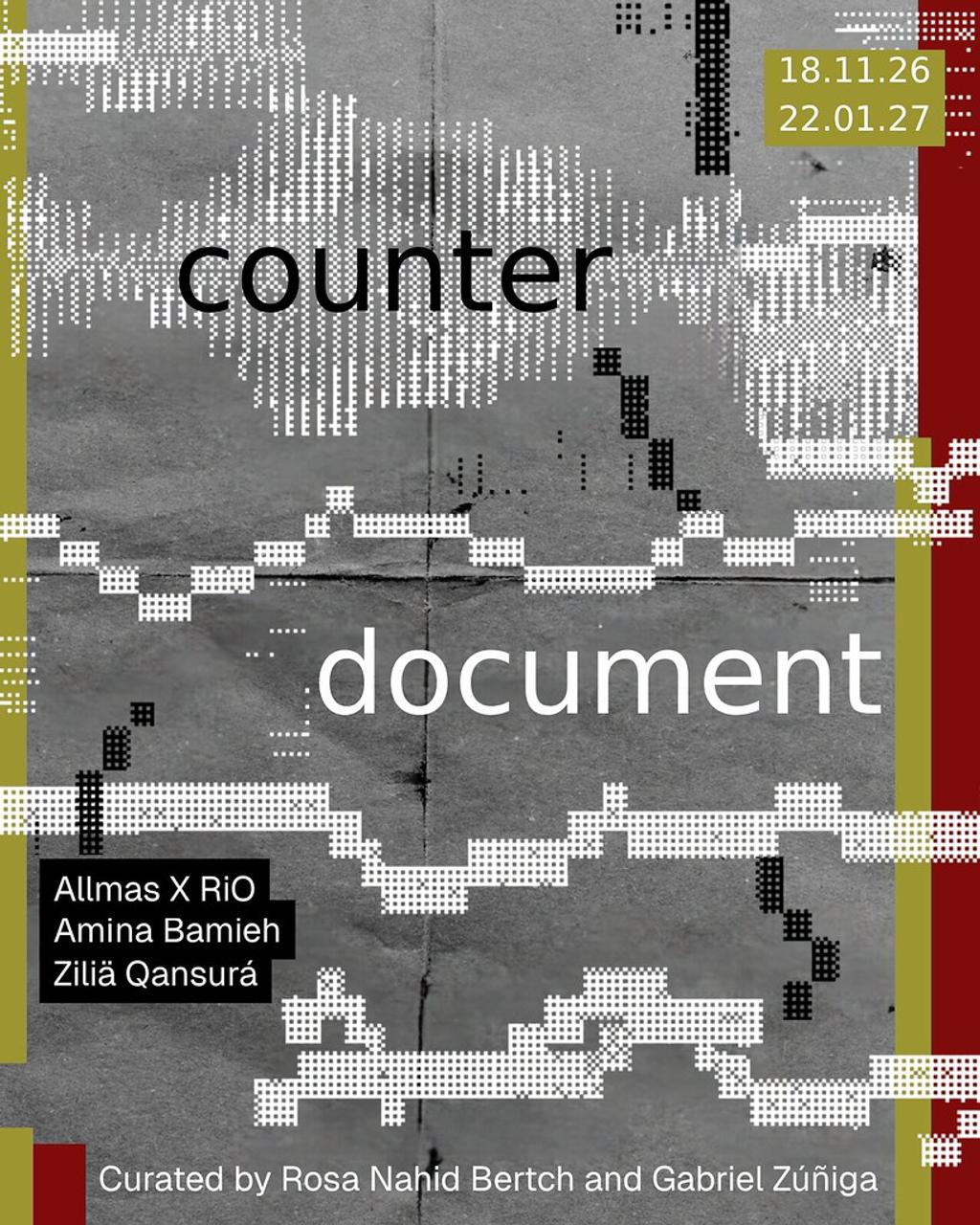
Verbindung zu esel.at
Curated by: Rosa Nahid Bertsch & Gabriel Zúñiga
Artists: allmas X RIO, Amina Bamieh, Ziliä Quansurá
Mentorship and Supervision: Ale Zapata
External Mentors: andrea ancira, Eva Fischer, Aleksei Borisionok, Smaranda Krings and Pêdra Costa
While state-documents function as technologies of power and turn fictions of borders, property, foreigners and enemies into reality, the exhibition counter-document explores artistic opposition to the colonial narrative. The dialogue between the works of the three participating artists opens up the question of how to resist dominant imperial narratives.
allmas X RIO gathered bureaucratic documents, letters from police, courts and government agencies received by activists in connection with pro-Palestinian activism in Austria, and returns them as Letter of Resistance, exposing the structural violence and political control behind bureaucratic repression. Asking what it means to remain in solidarity and publicly vocal under increasingly authoritarian regimes. Amina Bamieh’s research into Tatreez, the traditional Palestinian cross-stitch embroidery, explores its storytelling power and makes visible what these patterns carry: a language written with needle and thread. In times of ongoing genocide in Gaza, speaking about dresses might seem trivial, but it is in fact vital, highlighting Palestinian life in all its expressions is an act of care, remembrance and resistance. Ziliä Qansurá’s felted angels take up the history of Les Amours du Nord, young Bashqort warriors forced to fight for the Russian Empire during the Napoleonic Wars, and transforms it into wool pieces, exploring the tension between innocence and violence, glorification and erasure, and exposing how imperial narratives turn the suffering of Indigenous peoples into heroic myths.
The exhibition brings the document into conversation and discloses its function. Through the performativity and materiality of paper and wool, the artworks reveal how the extraction of these materials produced violence, while also bearing witness to colonial violence as in Palestine and Bashkort territory, and are then put into resistance.
To stand against the document is not only to unveil violence. It is to tell another story: the one of possibility. And it is to question our own position, as part of a society that cooperates with a genocidal, colonial logic of war. To resist is to take a position and, from that position, to generate action and movement. In counter-document we are present with our body as a document in itself. We gather around matter, embracing it, knowing that, like us, it constantly tends to a wound.
The exhibition is the culmination of the Curatorial Laboratory, a four-month paid mentoring programme, conceived as a model for more equitable curatorial practice, offering emerging curators who are systematically excluded from institutional structures the chance to gain experience in a supported, non-gatekept environment.