
B. Ingrid Olson: Machines Complex
Zeitgenössische Kunst Ausstellung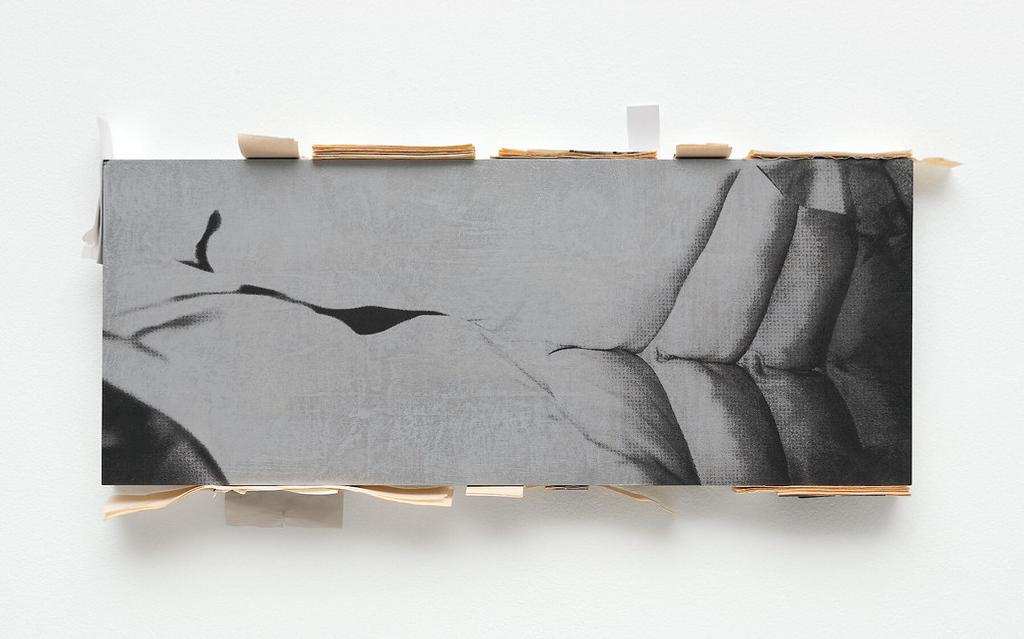
Verbindung zu esel.at
Opening Friday, 12. 12. 2025, 6 – 8 pm
OC Bar hosted by Marijana Schneider and Yves-Michele Saß
4 (0)
This is an introductory text with information about an exhibition titled Machines Complex by artist B. Ingrid Olson, on view from 12 December, 2025 - 24 January, 2026 at Croy Nielsen in Vienna, Austria. While the exhibition is on view this text is printed on a sheet of paper and displayed at the entry to the gallery; The copy is also published on the gallery’s website during this time and in perpetuity. Written by Olson, the text describes the exhibition in three parts. The artworks on view are all wall-based and were made using techniques including casting, carving, hand-sculpting, screen-printing, painting and photography. The materials used include aluminum, acrylic paint, ink, milk paint, printed photographs, wood, paper, plastic, resin, fabric, glue, tape, and staples.
3 (1)
I understand Machines Complex as three exhibitions, or rather the same exhibition, performed three times over. There are three rooms and eleven artworks. Each room iterates. It is a sketch in repetition. Not just copies but, rather, like biological reproduction, where there is difference in each generation. As with translation, sometimes, small shifts can change meaning or change a presentation of information noticeably, or even drastically. Changes can come from one or multiple points in the process. Differences in output from camera to development to scan to computer screen to printer to wall. This transference of information offers errors—or identifiable differences in the reproduction. In the marginalia, I am thinking of surgery, pulling a body apart, explosions, scattering of bodies, identities, information. Maybe that machines and systems, though not human, are a way of regathering and reconfiguring the image-info shrapnel. I feel pulled apart right now for many reasons. This show is made in that psychic space. Some of the things I’ve selected and made for this three room, three x exhibition amplify the feeling of explosive disintegration, while other methods sit in the aftermath of a mess; gathering and repeating knowns and unknowns to make sense and re-order. There is a machine running all of this, and the engine’s whir is a run-on sentence. These are aggregate bodies birthed from the reservoir of my archive.
2 (2)
Walk up one flight of stairs to enter the gallery. Turn right into a small hallway, which leads to the first small entryway into the main gallery. This preliminary vestibule is a tight space to fit into if anyone else is in the space with you. More of a conjunctive than functional space, this little room is not designed to rest in. Yet, there is a small work installed here. Is it possible to see it, if you can’t step back? Or is it even possible to see it from a distance? Walking into the largest room, there is an openness and freedom to move after the first constrictions. You can live in this room. There are windows that stretch along the farthest wall. Sculptural reliefs punctuate the opposing walls. Depending on the time of day, or if the sun is even out when you are there, the light that falls across the reliefs will alter the angles and intensities of the shadow-images created by the forms. Turn around again and there is another door that leads to the third room. It is a long and narrow space. It is tucked away. Here, you will find a group of paintings. The panels are framed, either by thin board, or by clusters of photographic prints. You have to bend over to see the bottom edge and depending on your height, you may have to crane your neck to see the top. Oblique and direct angles will offer different information. When you are done here, turn around and see the exhibition in reverse.
1 (3)
Croy Nielsen is pleased to announce Machines Complex, B. Ingrid Olson’s first solo exhibition at the gallery. The trifurcated presentation includes [M]others, a multi-part installation of sculptural reliefs; small photographic assemblages, which are extensions of the artist’s psycho index series; as well as a new series that combines painting, screenprinting, image-transfer, and collage processes on wood panels.
[M]others is a rare example of casting within Olson’s ongoing Index series, which are minimal reliefs that are abstractions of human body parts. To make the wall-mounted forms, the artist typically employs a subtractive carving process—involving a digital file and a CNC machine. However, in [M]others, the carved reliefs were instead used as ‘mother’ forms, which were then molded and cast into a mixture of polyurethane resin and ground ceramic. There are small insertions into and additions onto the recessed surfaces of the casts. These additional elements were made using processes and materials that both complement and exaggerate the hard edges and unnatural resin. The eight sculptural fragments are installed to correspond with the various heights of their bodily referents–head, chest, arm, crotch, feet–creating a marker of an absent and scattered figure.
Small ad hoc photo-collages are also on view, related to the artist’s psycho index series. The hand-held size of the prints ties these works to the frenetic, haptic activity of jotting down notes on scrap paper, but the scale also functions as an attenuation of a visitor’s access and speed to view them. They are scaled so that they are only legible from a very proximate, or intimate distance. In three assemblages sharing the title Psychos Reservoir (Video Strip Contents), the tiny images are grouped, lined up in a row, and affixed to long, tabular chipboard strips. As with their predecessors, these works are culled from the artist’s full and growing repository of photographs, taken between 2011 and the present. The prints are stapled, taped, and glued to the chipboard along a horizontal axis, like a row of a spreadsheet, or stills on a strip of film. What presents as scattershot information gathers into something like a prostrate exquisite corpse made by a single artist over the course of more than a decade.
Two works from a new series of paintings on view also feature tiny psycho collages. Narrow stacks of photographic prints line the tops, bottoms, and sides—acting as fragile, notational frames. On the frontal plane, larger images have been screenprinted or glue transferred to the surface. Both techniques noticeably transform and alter the images, underscoring their quality of having been reproduced. The effect of this image-translation is one of color shift, detail loss, and image error, where the prints or transfers fail to impress or adhere to the surface. The paintings picture a cut, muscular torso; a clear plastic tube held from nipple to navel; a play of externalized viscera; and a liquid splayed across a slide-like surface for examination. While each pictures a separate operation, the works are united in their dualistic re-presentations of natural, soft and liquid bodies that have been subjected to an ongoing cycle of mechanical reproductions.